

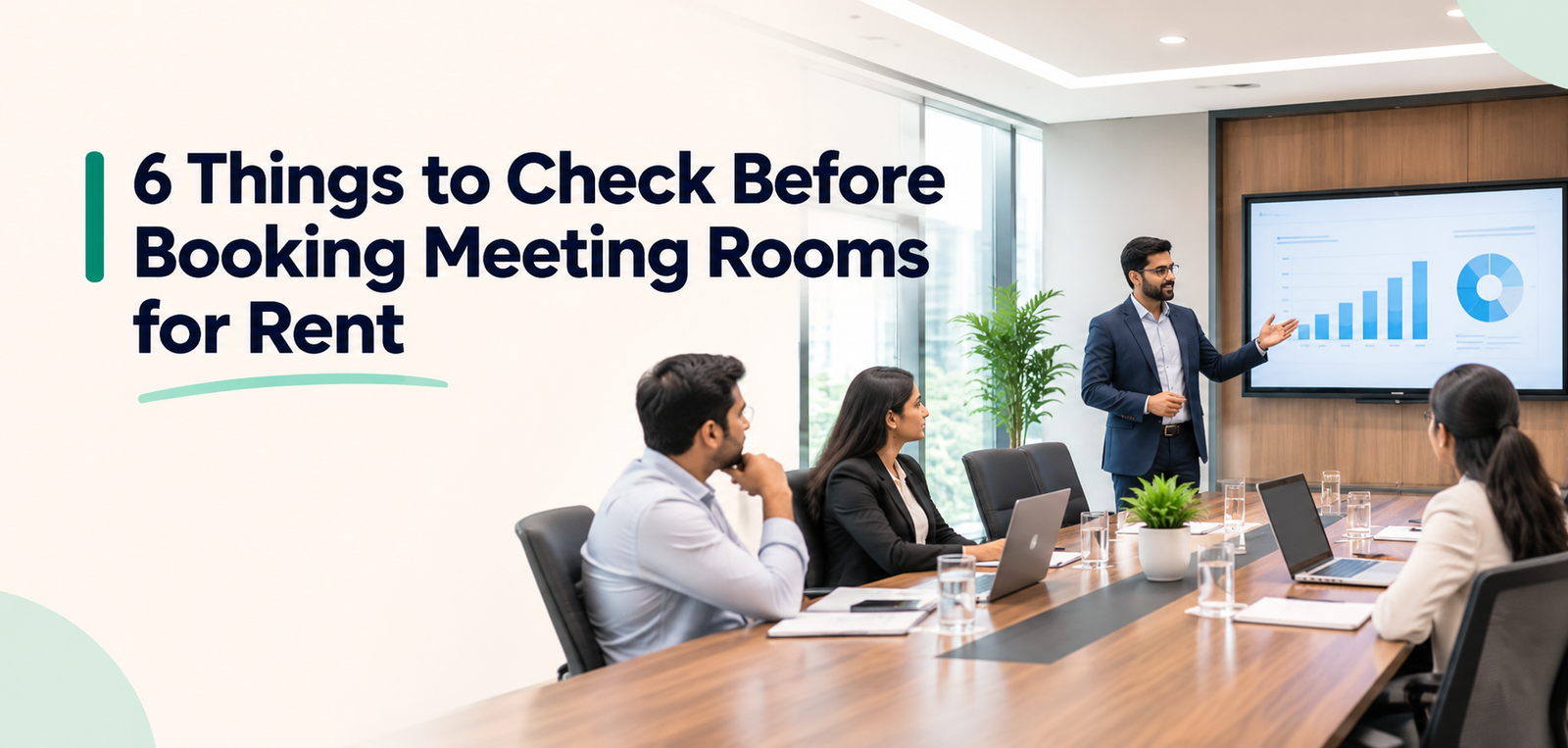
Corporate presentations are an important part of modern business operations. Whether a company is introducing a new product, discussing a business strategy, meeting potential clients, or presenting quarterly performance reports, the environment plays an important role in creating a positive impression. A well-organised presentation requires proper planning, suitable facilities, and a comfortable space where participants can communicate effectively.
Many businesses prefer Meeting Rooms for Rent because they provide access to professional facilities without the responsibility of maintaining a permanent conference room. This arrangement is particularly useful for startups, small businesses, consultants, freelancers, and established companies that occasionally need a dedicated space for professional discussions.
However, choosing the right venue requires more than checking its appearance or rental price. The seating arrangement, available technology, accessibility, privacy, pricing structure, and additional facilities can all influence the success of a corporate presentation.
In this guide, we will discuss six important things that businesses should check before selecting a professional meeting venue.
1. Evaluate Room Capacity and Seating Arrangements
The first factor to consider is the size of the meeting room. Before selecting a venue, businesses should estimate how many people will attend the presentation and what type of seating arrangement will be most suitable.
A room that is too small can make participants uncomfortable and restrict movement. Similarly, an unnecessarily large room may create a less engaging atmosphere, especially when only a few people are attending.
Different business activities require different seating arrangements. For example, a boardroom arrangement works well for management meetings and client discussions, while a classroom arrangement may be more appropriate for training sessions.
Common Seating Arrangements to Consider
Boardroom Style
This arrangement generally includes a central conference table surrounded by chairs. It is suitable for management discussions, business negotiations, and professional presentations involving a limited number of participants.
U-Shaped Seating
This arrangement allows participants to face one another while maintaining a clear view of the presenter. It can be useful for workshops, interactive discussions, and training activities.
Classroom Style
Tables and chairs are arranged in rows facing the presentation area. This setup is useful when attendees need to take notes or use laptops during training sessions.
Theatre Style
Chairs are arranged in rows facing the speaker or presentation screen. This arrangement can accommodate larger audiences when individual tables are not required.
Before making a reservation, ask the venue whether the seating arrangement can be adjusted according to your requirements. Also, check the available space for laptops, presentation materials, documents, and other business essentials.
Selecting an appropriate room layout helps maintain comfort and allows participants to concentrate on the purpose of the meeting.
2. Check Audio-Visual Equipment and Technical Facilities
Technology is an essential part of modern corporate presentations. Business professionals frequently use digital presentations, online demonstrations, video conferences, and multimedia content to communicate their ideas.
Therefore, checking the available technical equipment should be an important part of the selection process.
A professional meeting venue should ideally provide access to essential presentation facilities. These may include projectors, large display screens, microphones, speakers, and reliable internet connectivity.
Essential Technical Facilities to Check
- High-speed internet connectivity for online presentations.
- Projectors or display screens for presenting slides.
- HDMI and other compatible connection options.
- Microphones and speakers for larger gatherings.
- Video conferencing equipment for remote participants.
- Convenient power sockets for laptops and mobile devices.
- Suitable lighting for presentations and discussions.
It is also important to confirm whether the equipment is included in the rental package or requires an additional payment.
For example, a company planning to present a product demonstration may need a large display screen and stable internet connectivity. A business conducting a virtual client meeting may require a webcam, microphone, and suitable audio equipment.
Whenever possible, request a demonstration of the equipment before the scheduled meeting. Testing the facilities in advance can help identify technical problems and reduce the chances of interruptions.
Reliable technology allows presenters to focus on delivering their message rather than dealing with unexpected equipment issues.
3. Consider the Location and Accessibility of the Venue
Location is another important consideration when selecting a professional meeting venue. Even a well-equipped room may not be convenient if participants experience difficulty reaching the destination.
Businesses should select a location that is reasonably accessible for employees, clients, business partners, and other attendees.
When comparing Meeting Rooms for Rent, consider the distance from major roads, public transportation facilities, business areas, and other important locations.
For companies organising meetings in Jaipur, accessibility can be particularly important when participants are travelling from different parts of the city.
Important Location Factors to Consider
Transportation Connectivity
Check whether attendees can conveniently reach the location by car, taxi, or public transportation.
Parking Availability
Confirm whether parking facilities are available for employees and visiting clients. This can be especially useful for meetings involving multiple participants.
Nearby Business Facilities
Locations near restaurants, cafes, and other business services can make it easier to organise longer meetings.
Clear Directions
Make sure the venue has a clearly identifiable address and that attendees can find it without confusion.
Accessibility Requirements
Consider whether the location is suitable for participants with mobility requirements.
A convenient venue can help attendees arrive on time and reduce unnecessary travel-related stress.
Businesses looking for a professional workspace in Jaipur can also explore Arvian Workspaces to understand available workspace solutions and facilities.
4. Check Privacy, Security, and the Professional Environment
Privacy is especially important during corporate presentations and business discussions. Companies may discuss confidential information, client requirements, financial reports, future plans, or internal strategies during meetings.
Selecting a suitable venue can help maintain a professional environment and minimise unnecessary interruptions.
Before confirming a reservation, check whether the room is enclosed and provides sufficient privacy for the intended discussion.
Important Privacy and Security Factors
Sound Insulation
A room with suitable sound insulation can help prevent conversations from being easily heard outside the meeting area.
Controlled Access
Check whether the meeting space is separate from common areas and whether access can be managed appropriately.
Comfortable Environment
Proper lighting, ventilation, air conditioning, and clean surroundings can help participants remain comfortable throughout the session.
Internet Security
For meetings involving sensitive information, businesses should understand the available network arrangements and follow their own security requirements.
Professional Atmosphere
The overall appearance of the venue should be appropriate for welcoming clients, investors, and business partners.
A professional environment also helps presenters communicate confidently. When attendees feel comfortable, they can participate more actively in discussions and concentrate on important business matters.
Companies should avoid choosing a venue based only on attractive photographs. If possible, visit the location or request recent photographs and details about the actual meeting facilities.
5. Understand Pricing, Booking Duration, and Terms
Budget planning is an important part of organising corporate events and presentations. Before selecting a venue, businesses should understand the complete rental structure and the services included in the package.
Different providers may offer hourly, half-day, or full-day booking options. The most suitable option depends on the duration of the presentation and the additional time required for preparation.
Important Pricing and Booking Details to Check
- Hourly rental charges.
- Half-day and full-day booking packages.
- Equipment and technology charges.
- Additional fees for refreshments.
- Taxes and other applicable costs.
- Cancellation and rescheduling policies.
- Charges for extending the booking duration.
- Advance payment and refund conditions.
For example, a business conducting a two-hour client presentation may prefer an hourly package. However, a company organising a full-day workshop may find a longer booking arrangement more convenient.
It is also useful to understand the rules regarding early access. Presenters sometimes need additional time to arrange documents, test presentation equipment, and prepare the room before attendees arrive.
A clear understanding of pricing prevents confusion and makes it easier to compare different venues.
During the corporate meeting room booking process, businesses should also request written confirmation of the date, time, facilities, payment conditions, and any additional services.
This documentation helps organisers avoid misunderstandings and ensures that both parties have a clear understanding of the reservation.
6. Review Additional Amenities and On-Site Support
Apart from the main meeting facilities, additional amenities can make a significant difference to the overall experience.
Corporate presentations may last several hours, so participants should have access to a comfortable and well-maintained environment.
Useful Additional Facilities to Look For
Reception Assistance
A reception area can help visitors identify the correct meeting location and receive basic assistance when they arrive.
Refreshment Facilities
Access to drinking water, tea, coffee, or other refreshments can improve convenience during longer meetings.
Housekeeping
A clean and organised room creates a positive impression and supports a comfortable working environment.
Technical Assistance
On-site support can be helpful when presenters experience problems with display screens, internet connectivity, or other equipment.
Waiting Area
A separate waiting area can be useful when clients or guests arrive before the scheduled meeting time.
Comfortable Furniture
Suitable tables and chairs help participants remain comfortable during extended presentations.
It is also important to check whether the venue has staff available to assist with basic arrangements. Having someone to help with room preparation or equipment-related questions can make the organiser’s responsibilities easier.
Businesses that regularly conduct meetings should consider the quality and consistency of these additional services before selecting a long-term workspace provider.
Why Businesses Prefer Flexible Professional Meeting Facilities
Traditional offices often require businesses to maintain dedicated meeting rooms even when they are not used regularly. This can increase operational expenses and require additional space management.
Flexible meeting facilities provide another option. Companies can arrange a suitable venue whenever they need to conduct presentations, discussions, training sessions, or client meetings.
There are several reasons why businesses consider this arrangement:
Better Cost Management
Renting a dedicated meeting venue for specific requirements can help companies avoid the expenses associated with maintaining an additional permanent room.
Businesses can select booking durations according to their actual requirements instead of paying for unused facilities throughout the year.
Greater Flexibility
Companies may need different types of meeting spaces for different activities. A small room may be sufficient for a client discussion, while a larger venue may be required for a team presentation.
Flexible arrangements allow businesses to select a suitable setup for each occasion.
Professional Client Experience
Meeting clients in an organised business environment can create a positive first impression. Comfortable seating, suitable technology, and a professional atmosphere contribute to a better experience.
Support for Hybrid Working
Businesses following hybrid work arrangements may have employees working from different locations. A dedicated meeting venue can provide a common place for important discussions and collaborative sessions.
Convenient Business Operations
Companies can concentrate on their presentations, discussions, and business activities without having to manage a permanent conference facility.
How to Prepare Before Your Corporate Presentation
Selecting a suitable venue is only one part of organising a successful presentation. Proper preparation is equally important.
Businesses should prepare a checklist before the scheduled meeting to ensure that everything is ready.
Confirm the Reservation
Recheck the booking date, start time, duration, room capacity, and included facilities.
Prepare Presentation Materials
Organise presentation slides, reports, documents, and any supporting information in advance.
Test Technical Equipment
Check the display screen, projector, internet connection, microphone, and other required devices.
Share Meeting Details
Send attendees the venue address, directions, meeting time, and any instructions they may need.
Arrive Early
Give presenters sufficient time to arrange materials, test equipment, and prepare the room.
Keep Backup Materials
Save important presentation files in more than one accessible location to avoid problems caused by unexpected technical issues.
Assign Responsibilities
Decide who will welcome attendees, manage the presentation, coordinate technical requirements, and handle questions.
These simple preparations can help businesses conduct more organised and productive meetings.
Choosing the Right Workspace Solution for Your Business
Different companies have different workspace requirements. Some businesses need occasional meeting facilities, while others require regular access to private cabins, desks, or larger office environments.
For example, startups may require flexible arrangements while building their teams. Consultants may need professional facilities when meeting clients. Established businesses may require additional meeting space during important projects.
Businesses exploring a coworking space jaipur option may also consider how shared workspace facilities support their daily operations and occasional professional meetings.
Similarly, organisations looking for a suitable office space jaipur solution should evaluate factors such as accessibility, infrastructure, available amenities, and the ability to accommodate future business requirements.
A coworking office space arrangement may also be useful for professionals who want access to shared facilities without maintaining a complete traditional office independently.
The important thing is to select a workspace arrangement that matches the company’s current needs, budget, team size, and working style.
Conclusion
Organising a successful corporate presentation requires attention to several important details. The right meeting environment can support clear communication, professional interactions, and productive discussions.
Before selecting a venue, businesses should carefully evaluate room capacity, seating arrangements, technical equipment, location, privacy, pricing, and additional amenities. These factors help organisers make informed decisions and avoid common problems during important business meetings.
Choosing Meeting Rooms for Rent can offer businesses a flexible way to access professional facilities without maintaining a dedicated conference room throughout the year.
With proper preparation and careful venue selection, companies can create a comfortable environment for client presentations, team discussions, training sessions, and business planning activities.
For businesses exploring professional workspace solutions in Jaipur, Arvian Workspaces is a place to learn more about flexible workspace options for modern business requirements.
Frequently Asked Questions (FAQs)
1. What should businesses check before booking a meeting room?
Businesses should check room capacity, seating arrangements, internet connectivity, audio-visual equipment, privacy, location, pricing, and available amenities before confirming a booking.
2. What facilities should a professional meeting room provide?
A professional meeting room should ideally offer comfortable seating, high-speed Wi-Fi, a projector or display screen, power sockets, proper lighting, air conditioning, and access to refreshments.
3. Are meeting rooms available for hourly bookings?
Many workspace providers offer hourly, half-day, and full-day booking options. Availability and pricing depend on the provider and the selected meeting room.
4. How much space is required for a corporate presentation?
The required space depends on the number of attendees, presentation format, and seating arrangement. Businesses should confirm the room capacity before booking to ensure everyone has sufficient space.
5. Why should businesses choose rented meeting rooms instead of maintaining their own?
Rented meeting rooms allow businesses to access professional facilities when required without maintaining a dedicated conference room. This can help manage office space and operational expenses.
6. Are meeting rooms suitable for virtual meetings?
Yes, provided the room has reliable internet connectivity and suitable audio-visual equipment, such as microphones, speakers, webcams, and display screens.
7. Can meeting rooms be used for interviews and training sessions?
Yes. Meeting rooms can be used for job interviews, employee training, workshops, client presentations, team discussions, and business planning sessions.
8. What should I confirm before finalising a meeting room booking?
Confirm the booking date, duration, room capacity, seating arrangement, available equipment, total charges, cancellation policy, and any additional service fees before making payment.