

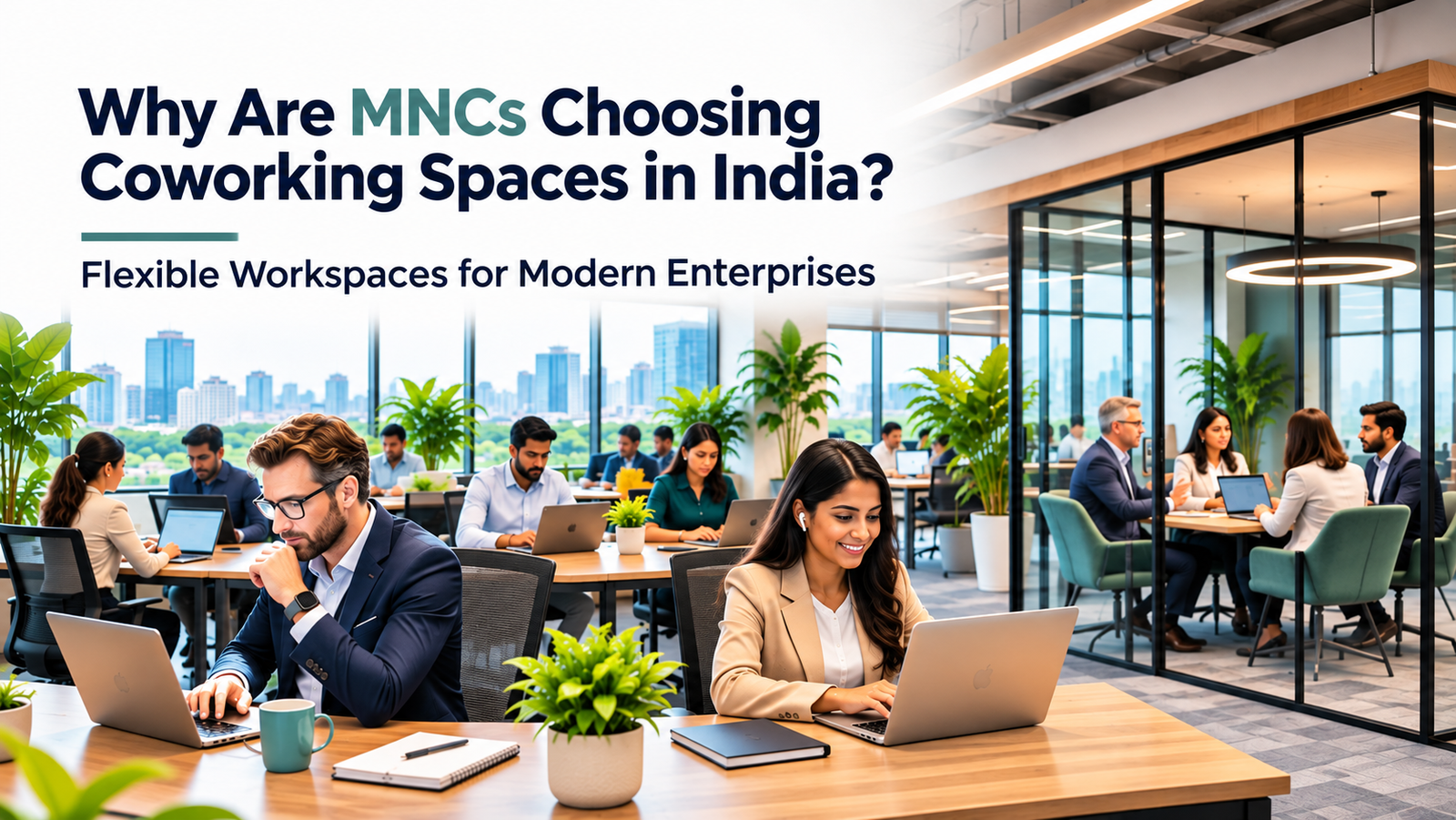
India has become an important destination for multinational companies (MNCs) looking to expand their operations, access skilled professionals and enter new markets. From technology and finance to consulting, e-commerce and customer support, international businesses are exploring opportunities across Indian cities.
However, establishing an office in a new location involves several challenges. Traditional office setups require investment in commercial property, interiors, furniture, infrastructure and ongoing maintenance. These requirements can make expansion expensive and time-consuming.
This is one reason why coworking spaces in India are becoming an attractive option for multinational companies. They provide ready-to-use office infrastructure, flexible workspace arrangements and professional facilities without requiring businesses to manage every aspect of a traditional office.
Let’s explore why MNCs are considering flexible workspaces and how these environments support their business operations.
1. Lower Initial Investment and Operational Costs
One of the biggest reasons MNCs consider coworking spaces is the opportunity to manage office expenses more efficiently.
Setting up a traditional corporate office involves several expenses, including rent deposits, furniture, interiors, internet connections, security systems, electricity and housekeeping. These costs can increase significantly when a company establishes offices in multiple cities.
A coworking space provides much of this infrastructure in an already operational environment. Companies can select suitable seating or office arrangements and use available facilities without independently investing in every requirement.
This can help businesses:
- Reduce initial office setup expenses.
- Avoid major investments in furniture and interiors.
- Manage recurring facility-related costs.
- Reduce administrative responsibilities.
- Allocate more resources towards core business activities.
For companies entering a new market, this approach can make the initial office setup more manageable.
2. Flexibility to Expand or Reduce Teams
Business requirements are constantly changing. An MNC may start with a small regional team and expand its workforce as operations grow. In other situations, a company may need temporary office space for a particular project.
Traditional office leases may not always support these changing requirements. Long-term agreements and fixed office layouts can make expansion or downsizing complicated.
A flexible workspace offers different options, such as dedicated desks, private cabins, meeting rooms and managed office arrangements.
Companies can select workspace capacity according to their current team size and explore additional space as their requirements change.
This flexibility is particularly useful for:
- Regional sales and marketing teams.
- Temporary project-based departments.
- Companies entering new Indian markets.
- Businesses adopting hybrid working arrangements.
It allows organisations to adjust their workspace requirements without immediately committing to a larger traditional office.
3. Faster Business Expansion Across Indian Cities
Entering a new city requires companies to establish a local presence. Finding commercial property, negotiating leases, arranging interiors and setting up infrastructure can take considerable time.
Ready-to-use coworking environments can simplify this process. Businesses can explore existing office facilities and begin operations without handling every aspect of office development independently.
Cities such as Jaipur, Ahmedabad, Indore, Lucknow and Chandigarh are attracting businesses looking for new opportunities beyond traditional metropolitan markets.
For an MNC exploring a new location, a flexible workspace can serve as a practical starting point. It allows the company to establish a presence while evaluating its long-term business requirements.
4. Ready-to-Use Office Infrastructure
A professional office requires more than desks and chairs. Employees need reliable internet, comfortable furniture, meeting facilities and a clean working environment.
Building and maintaining these facilities independently requires investment and regular supervision.
Most professionally managed coworking spaces offer essential infrastructure that businesses can use from the beginning. Depending on the provider and selected plan, facilities may include:
- High-speed Wi-Fi and internet connectivity.
- Ergonomic furniture and workstations.
- Meeting rooms and conference facilities.
- Reception and visitor management.
- Housekeeping and maintenance.
- Pantry facilities.
- Power backup and security arrangements.
Having these facilities available in one place reduces the time businesses spend coordinating daily office requirements and allows employees to focus on their work.
5. Better Support for Hybrid Work Models
Many multinational companies now follow hybrid working arrangements, where employees divide their time between home and office.
Maintaining a large traditional office may not always be practical when employees are not present every day. Businesses need workspace solutions that match actual office usage.
Hybrid workspaces can help address this requirement by providing professional working environments whenever employees need them.
For example, a company may maintain dedicated seating for its core team while using meeting rooms for weekly discussions, client presentations and team collaboration.
This arrangement can help businesses manage office requirements according to employee attendance and operational needs.
However, companies should evaluate internet reliability, privacy, access control and data security before selecting a workspace for hybrid teams.
6. Professional Environment for Employees and Clients
Workplace quality plays an important role in employee experience and business relationships. MNCs need professional environments where employees can work comfortably and clients can attend meetings.
A well-maintained coworking environment can provide a corporate atmosphere without requiring a company to develop its own office from scratch.
Reception areas, organised workstations, meeting rooms and common facilities create a professional impression during business visits and discussions.
For employees, a structured office environment also provides separation between personal and professional activities. Access to meeting spaces and collaborative areas makes it easier to work together.
Before selecting a workspace, companies should check the actual facilities, cleanliness, accessibility and overall working environment.
7. Access to Business Networking Opportunities
One advantage of coworking environments is the opportunity to work alongside professionals from different industries.
A shared workspace may bring together consultants, entrepreneurs, freelancers, start-ups and established businesses. This creates opportunities for professional interaction and knowledge sharing.
For MNCs, these interactions may help employees connect with local professionals, understand regional business communities and discover potential collaboration opportunities.
Networking opportunities can develop through:
- Informal conversations in common areas.
- Professional events and community activities.
- Industry-related discussions.
- Business meetings and shared events.
These interactions do not automatically lead to partnerships, but they can help businesses build useful professional connections.
8. Access to Emerging Business Locations
MNCs do not always need to operate from expensive central business districts. Depending on their business model, they may also consider emerging commercial areas with suitable infrastructure and employee accessibility.
Jaipur is developing as a business destination for companies exploring opportunities in Rajasthan. Businesses can evaluate locations based on connectivity, workforce availability, customer access and overall office requirements.
A coworking space in Jaipur can be an option for companies that want to establish a professional workspace without immediately committing to a large traditional office.
Areas with good road connectivity, nearby residential communities and access to public transport may be worth considering when selecting an office location.
9. Reduced Office Management Responsibilities
Managing a traditional office involves several responsibilities that are not directly connected to a company’s core business.
These include coordinating housekeeping, maintaining office equipment, managing internet services, arranging repairs and supervising common facilities.
For multinational companies operating across different cities, handling these activities at multiple locations can become complicated.
A managed office space or shared workspace can reduce some of these responsibilities through facility management services provided by the workspace operator.
Companies can focus more on business activities while the provider handles agreed operational services.
The level of support depends on the selected plan, so businesses should review the service agreement to understand what is included.
10. Multiple Workspace Options Under One Roof
Different teams within an MNC may have different workspace requirements. A sales team may need dedicated workstations, management may require private cabins, and project teams may need meeting rooms.
A flexible workspace provider may offer several arrangements to meet these needs.
Dedicated Desks
Dedicated desks provide assigned workstations in a shared office environment. They are suitable for employees who need a regular workplace without renting an entire office.
Private Cabins
Private cabins offer enclosed working areas for teams that need additional privacy. They can be useful for management teams, small departments and businesses that handle confidential discussions.
Meeting Rooms
Meeting rooms provide professional spaces for team discussions, interviews, presentations and client meetings. Companies can use them according to their booking requirements.
Managed Office Space
Managed office space can be suitable for businesses that need a dedicated office environment with workspace infrastructure and facility support. Customisation and services depend on the provider.
Having multiple options makes it easier for businesses to select an arrangement that matches their team structure and daily activities.
What Should MNCs Consider Before Choosing a Coworking Space?
Although coworking spaces offer several advantages, not every workspace is suitable for every multinational company. Businesses should evaluate their operational and technical requirements before making a decision.
Important factors include:
1. Location and Connectivity: Choose a location accessible to employees, clients and business visitors.
2. Internet Reliability: Check internet speed, backup arrangements and technical support.
3. Data Security and Privacy: Evaluate access controls, visitor policies, network security and suitability for confidential work.
4. Meeting Facilities: Ensure that meeting rooms and conference facilities match the team’s requirements.
5. Pricing and Agreement Terms: Understand the complete pricing structure, deposits, additional charges and contract conditions.
6. Scalability: Check whether additional desks, private cabins or larger office arrangements can be provided as the team grows.
7. Facility Management: Review housekeeping, maintenance, reception, power backup and other included services.
Evaluating these factors helps businesses choose a workspace that supports their daily operations and future requirements.
Why Coworking Spaces Are Becoming Relevant for MNCs in India
The growing interest in flexible workspaces reflects a change in how companies approach office infrastructure. Businesses increasingly want working environments that support productivity while allowing them to respond to changing operational requirements.
For multinational companies, coworking spaces can provide ready-to-use infrastructure, flexible workspace arrangements and professional facility management.
They can be useful for market entry, regional operations, project teams and hybrid working models. At the same time, companies with specialised security, regulatory or infrastructure requirements may still prefer a dedicated or customised corporate office.
The right choice depends on the organisation’s size, work culture, budget and long-term business strategy.
Explore Flexible Workspace Solutions with Arvian Workspaces
Finding the right office environment is an important part of building a productive business. Whether a company needs dedicated desks, private cabins, meeting rooms or a professional office for its team, selecting the right workspace can make everyday operations easier.
Arvian Workspaces offers workspace solutions in Jaipur for professionals, entrepreneurs, growing businesses and teams looking for a comfortable and professional working environment.
Facilities include high-speed Wi-Fi, ergonomic furniture, power backup, housekeeping, reception services, pantry facilities and parking.
If you are planning to establish or expand your business presence in Jaipur, explore the available workspace options at Arvian Workspaces and find an arrangement that supports your team’s working needs.
Conclusion
MNCs are exploring coworking spaces in India because they offer an alternative to traditional office setups. Flexible workspace plans, ready-to-use infrastructure, reduced management responsibilities and access to emerging business locations make them worth considering.
From supporting hybrid teams to helping businesses enter new cities, coworking spaces can provide practical solutions for different stages of business growth.
As India’s commercial ecosystem develops, flexible workspaces are likely to remain an important option for organisations looking for adaptable and professionally managed office environments.
Frequently Asked Questions (FAQs)
1. Why are MNCs choosing coworking spaces in India?
MNCs consider coworking spaces because they offer ready-to-use office infrastructure, flexible workspace arrangements, facility management and the ability to establish teams in different cities without setting up a complete traditional office.
2. Are coworking spaces suitable for large companies?
Yes. Coworking spaces can support large companies through dedicated desks, private cabins, meeting rooms and managed office solutions. Suitability depends on team size, privacy requirements and available infrastructure.
3. How do coworking spaces help reduce office costs?
They can reduce initial investment in office interiors, furniture and infrastructure. Companies may also share facility costs and select workspace plans according to their requirements.
4. Can MNCs use coworking spaces for hybrid teams?
Yes. Flexible workspace arrangements can support hybrid teams by providing office access for employees who need a professional environment for meetings, collaboration or focused work.
5. What facilities do corporate coworking spaces provide?
Depending on the provider, facilities may include high-speed internet, dedicated workstations, private cabins, meeting rooms, reception services, housekeeping, pantry facilities and power backup.
6. Are coworking spaces available for MNCs in Jaipur?
Yes. Businesses can explore coworking and flexible workspace options in Jaipur for regional teams, project offices and professional working arrangements.
7. What is the difference between coworking space and managed office space?
A coworking space generally offers shared facilities and flexible seating, while managed office space usually provides a dedicated office environment with workspace and facility services arranged for a particular company.
8. What should an MNC check before selecting a coworking space?
An MNC should evaluate location, connectivity, internet reliability, privacy, data security, meeting facilities, pricing, contract terms and the provider’s ability to support future expansion.