

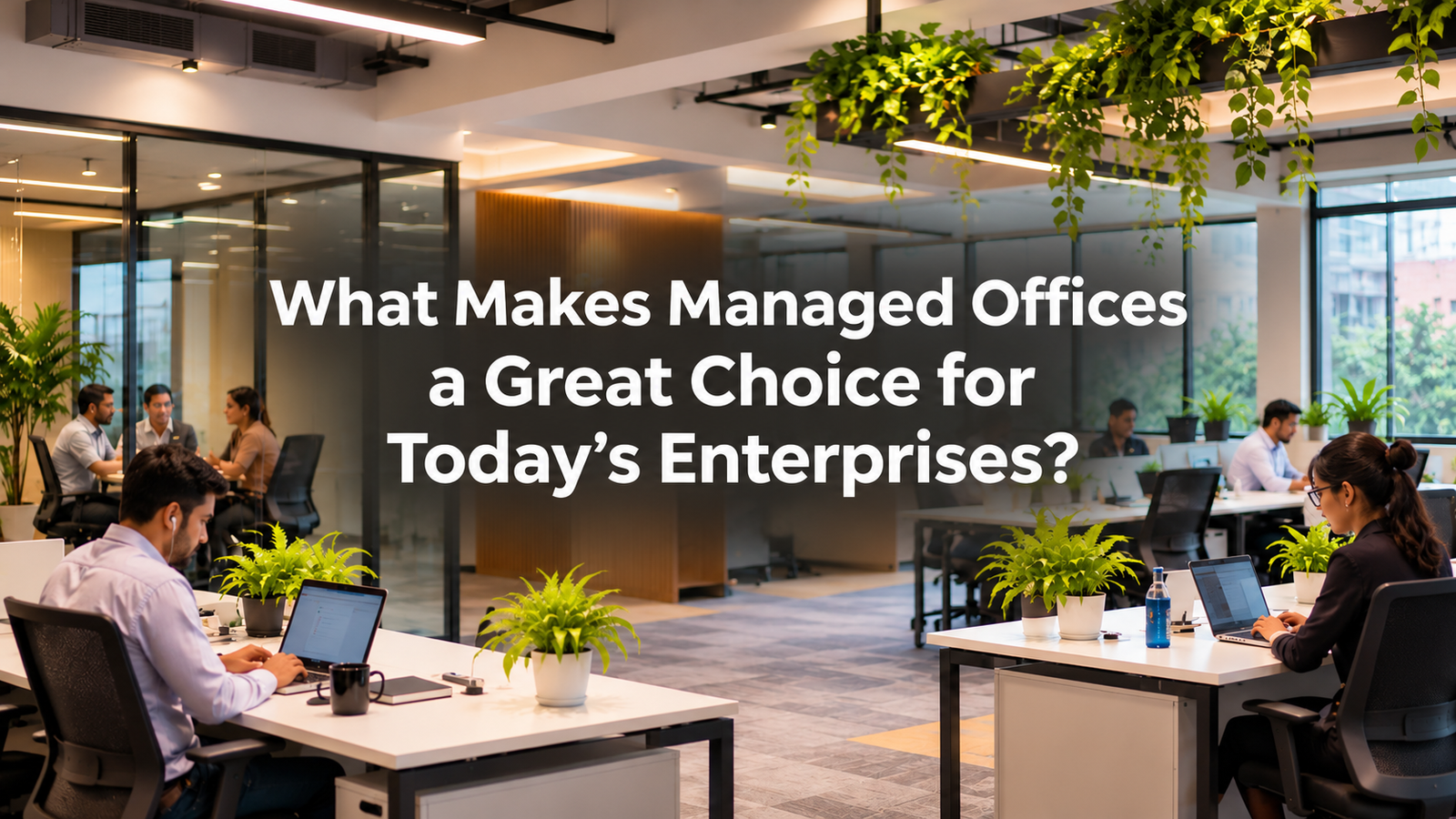
The way businesses operate has changed significantly over the last few years. Enterprises today need more than just an office with desks and meeting rooms. They need flexible work environments, modern infrastructure, professional facilities and the ability to expand without dealing with complicated office management responsibilities.
Traditional office spaces often require businesses to invest significant time and money in finding properties, designing interiors, purchasing furniture, setting up internet connections and managing daily operations. For companies looking to establish or expand their presence, these responsibilities can become challenging.
This is where Managed Offices offer a practical solution. They provide businesses with professionally maintained workspaces equipped with essential office facilities and operational support.
From growing startups to established enterprises, companies are exploring managed office solutions to create productive work environments while keeping their operations flexible.
But what makes managed offices a suitable choice for today’s enterprises? Let’s explore their major benefits and understand how they support modern business requirements.
What Are Managed Offices?
Managed offices are fully equipped and professionally maintained office spaces designed to meet the requirements of businesses. Unlike traditional office rentals, where companies manage most aspects of setting up and maintaining their workplace, managed office providers take care of several operational responsibilities.
These workspaces generally include office furniture, high-speed internet, meeting rooms, housekeeping, reception facilities, power backup and other essential amenities.
Businesses can use these facilities without independently managing every part of their office infrastructure.
A managed office can be customised according to the company’s requirements, including team size, workspace layout, seating arrangements and additional facilities.
For enterprises, this arrangement offers a convenient way to establish a professional workplace while focusing more on core business activities.
Why Are Enterprises Choosing Managed Offices?
Modern enterprises operate in competitive markets where flexibility, productivity and operational efficiency matter. They need workplaces that can support changing team sizes, business expansion and different working arrangements.
Managed offices help address these requirements by combining ready-to-use infrastructure with professional workspace management.
Here are some important reasons why enterprises are considering this workspace model.
1. Lower Initial Investment
Setting up a traditional office can require a significant initial investment. Businesses may need to pay security deposits, purchase furniture, install electrical systems, arrange internet connectivity and complete interior work before employees can start working.
These expenses can increase the financial burden, particularly when a company is entering a new city or expanding its operations.
Managed offices reduce the need for many of these individual setup investments. Essential infrastructure and facilities are generally available as part of the workspace arrangement.
This allows enterprises to use their available capital for important business activities such as hiring, marketing, technology and expansion.
2. Ready-to-Use Office Infrastructure
One of the biggest advantages of managed workspaces is that businesses can access an office that is already prepared for daily operations.
Instead of coordinating with multiple vendors for furniture, internet, electrical work and housekeeping, companies can move into an equipped workplace.
Depending on the provider and agreement, facilities may include:
- Ergonomic office furniture
- High-speed Wi-Fi
- Meeting and conference rooms
- Reception services
- Pantry facilities
- Power backup
- Housekeeping and maintenance
- Security arrangements
- Parking facilities
Having these facilities in place helps businesses reduce setup responsibilities and create a comfortable working environment for their employees.
3. Flexibility to Expand or Reduce Teams
Business requirements do not always remain the same. An enterprise may hire additional employees during expansion or reduce its workspace requirements when projects are completed.
Traditional office leases may not provide the flexibility required to manage these changing needs.
Managed office arrangements can offer more adaptable workspace options, depending on the agreement with the provider.
Companies can explore additional seating, private cabins or larger office areas as their requirements change.
This flexibility can be particularly useful for businesses managing project-based teams, new departments or expansion into different markets.
4. Less Time Spent on Office Management
Managing an office involves several responsibilities beyond providing employees with a place to work.
Businesses need to coordinate housekeeping, maintenance, internet services, electricity, security and other daily operational requirements.
These activities can consume valuable management time.
With a professionally managed workspace, many of these responsibilities are handled by the workspace provider.
This allows business owners, managers and administrative teams to concentrate on their primary responsibilities rather than managing everyday office operations.
How Managed Offices Support Modern Enterprise Work Culture
Work culture has evolved with the adoption of hybrid working, digital collaboration and geographically distributed teams.
Enterprises now need workplaces that support both individual productivity and team collaboration.
1. Supports Hybrid Working Models
Many businesses now follow hybrid work arrangements in which employees divide their time between working remotely and attending the office.
This means companies may not require the same amount of permanent office space as they did in traditional work environments.
Managed offices can provide flexible workspace arrangements that support different team requirements.
Employees can access professional work environments when they need to attend meetings, collaborate with colleagues or complete tasks that require an office setting.
2. Creates a Professional Business Environment
A well-maintained office creates a professional impression for employees, clients, business partners and visitors.
Managed offices generally provide organised seating, reception areas, meeting facilities and professionally maintained interiors.
These elements help businesses create a workplace that supports professional interactions.
For enterprises that regularly conduct client meetings, interviews and presentations, having access to suitable business facilities can make everyday operations more convenient.
3. Encourages Team Collaboration
Employees need opportunities to communicate, exchange ideas and work together on projects.
A professional office environment provides spaces where teams can interact directly, conduct discussions and solve problems collectively.
Managed offices may offer collaborative areas, meeting rooms and shared facilities that support these activities.
For businesses with employees working across different departments, such spaces can help create opportunities for interaction and teamwork.
Managed Office vs Traditional Office Space
When selecting a workplace, enterprises often compare managed office arrangements with traditional office rentals.
Both options can serve business requirements, but they differ in terms of setup responsibilities, flexibility and daily management.
| Comparison Factor | Managed Office | Traditional Office |
|---|---|---|
| Office Setup | Generally ready to use | Usually requires separate setup |
| Furniture | Often included | Purchased or arranged separately |
| Internet | Generally available | Arranged independently |
| Maintenance | Handled by provider as agreed | Managed by tenant or vendors |
| Housekeeping | Often included | Arranged separately |
| Flexibility | Depends on provider agreement | Often linked to lease terms |
| Initial Investment | Can be comparatively lower | Can be higher due to setup |
| Customisation | Depends on the arrangement | Greater control over fit-outs |
| Daily Management | Shared with provider | Primarily handled by business |
Which Option Should Enterprises Consider?
A managed office may be suitable for enterprises that want ready infrastructure, operational support and flexible workspace arrangements.
A traditional office may be preferable for businesses that want complete control over their property, interiors and long-term office customisation.
The right choice depends on the company’s budget, team size, business objectives and expected duration of occupancy.
Important Features Enterprises Should Look for in Managed Office Space
Not every workspace offers the same facilities. Before choosing a provider, enterprises should evaluate whether the available infrastructure can support their employees and business operations.
1. High-Speed Internet Connectivity
Internet connectivity is essential for modern businesses. Employees depend on reliable internet for video conferences, cloud-based applications, communication platforms and daily operations.
A suitable managed workspace should provide dependable connectivity and appropriate support for technical issues.
2. Meeting and Conference Rooms
Enterprises regularly conduct client discussions, internal meetings, interviews and presentations.
Meeting rooms provide a dedicated environment for these activities. Businesses should check the availability, capacity and booking arrangements of meeting facilities before selecting a workspace.
3. Comfortable Furniture and Seating
Employees spend several hours working at their desks. Comfortable seating, ergonomic furniture and a well-organised layout can contribute to a better workplace experience.
Businesses should evaluate desk arrangements, lighting, ventilation and overall workspace comfort.
4. Security and Power Backup
Security and uninterrupted operations are important for businesses.
A managed office should provide suitable security arrangements and power backup facilities. Enterprises should also understand how access control, visitor management and emergency support are handled.
5. Housekeeping and Maintenance
A clean and organised workplace supports a comfortable working environment.
Regular housekeeping, maintenance support and properly managed common areas are important features to consider when evaluating a workspace provider.
Why Location Matters When Choosing a Managed Office
Office location can influence employee convenience, client accessibility and overall business operations.
Enterprises should consider locations that are accessible through major roads and public transport, while also offering nearby facilities such as restaurants, banks and essential services.
Growing Business Locations in Jaipur
Jaipur is developing as a business destination for companies exploring opportunities beyond traditional metropolitan markets.
Areas such as Mansarovar, Vaishali Nagar, Malviya Nagar, Vivek Vihar and Patel Marg offer different commercial and connectivity advantages.
Businesses exploring a Managed Office Space in Jaipur should consider factors such as employee commuting distance, accessibility, available infrastructure and the surrounding business environment.
Choosing an accessible workspace can make everyday office operations more convenient for employees and visitors.
Benefits of Managed Office Space for Businesses
Managed offices offer several advantages beyond providing a physical workplace.
Here are some additional benefits enterprises can consider:
1. Faster Business Expansion
Companies entering a new city may not want to spend months arranging office infrastructure.
A ready-to-use managed workspace can help reduce the time required to establish a workplace, depending on availability and agreement terms.
2. Better Operational Convenience
Having several office facilities available through one provider can simplify coordination and daily workplace management.
Businesses can spend less time dealing with multiple service providers.
3. Multiple Workspace Options
Enterprises may have different requirements for different teams.
Depending on availability, managed workspace providers can offer private cabins, dedicated desks, meeting rooms and other workspace arrangements.
4. A Better Employee Experience
A clean, comfortable and organised workplace can contribute to employee satisfaction.
Access to essential facilities, collaborative areas and convenient office services helps create a more comfortable working environment.
Is Managed Office Space Suitable for Every Enterprise?
Managed offices can support several types of businesses, but they may not be the right choice for every organisation.
They can be particularly useful for:
- Companies expanding into new cities.
- Enterprises adopting hybrid work arrangements.
- Businesses with changing team sizes.
- Startups and growing organisations.
- Professional service companies.
- Businesses that want to reduce office setup responsibilities.
However, organisations requiring specialised infrastructure, complete property control or extensive customisation may prefer a traditional office arrangement.
Before making a decision, enterprises should compare the total cost, facilities, contract conditions and future workspace requirements.
How Arvian Workspaces Helps Businesses Find the Right Workspace
Finding a suitable workplace is an important part of building a productive business environment.
Arvian Workspaces offers professional workspace solutions designed to support freelancers, startups, growing businesses and corporate teams.
With workspace options across Jaipur, businesses can explore facilities according to their team size and working requirements.
The available workspace solutions include:
- Dedicated desks for individual professionals.
- Private cabins for teams requiring dedicated seating.
- Meeting rooms for professional discussions.
- Day passes for flexible workspace access.
- Office facilities designed for comfortable daily operations.
Facilities such as high-speed Wi-Fi, ergonomic furniture, power backup, housekeeping, reception services, pantry facilities and security arrangements help create a professional working environment.
Whether you are looking for a dedicated workspace or exploring office solutions for a growing team, Arvian Workspaces can help you find an option that matches your requirements.
Explore Arvian Workspaces and discover a professional workspace for your business in Jaipur.
Conclusion
Modern enterprises need workplaces that offer more than just office space. They need flexibility, professional infrastructure, operational convenience and an environment that supports employee productivity.
Managed offices bring several of these requirements together by providing ready-to-use workspaces and professional facility management.
From reducing initial setup responsibilities to supporting changing team sizes, they offer businesses an alternative to traditional office arrangements.
For enterprises exploring new locations, flexible working models or expansion opportunities, managed offices can be a practical workspace solution.
The key is to evaluate your business requirements, compare available facilities and choose a workspace that supports your long-term objectives.
Frequently Asked Questions (FAQs)
1. What is a managed office?
A managed office is a professionally maintained workspace that generally includes furniture, internet connectivity, housekeeping, maintenance and other essential office facilities. Businesses can use the space without independently managing every aspect of office operations.
2. Why do enterprises prefer managed offices?
Enterprises consider managed offices because they provide ready-to-use infrastructure, operational support and flexible workspace arrangements. These features can help businesses reduce setup responsibilities and focus on their core activities.
3. What facilities are included in managed office space?
Facilities may include office furniture, high-speed Wi-Fi, meeting rooms, reception services, housekeeping, pantry facilities, security and power backup. The exact amenities depend on the provider and agreement.
4. Is managed office space suitable for large companies?
Yes. Managed offices can support corporate teams and larger businesses depending on available space, seating capacity and infrastructure requirements.
5. How is a managed office different from a traditional office?
A managed office generally comes with ready infrastructure and operational support, whereas a traditional office usually requires the tenant to arrange furniture, internet, maintenance and other facilities independently.
6. Can businesses expand their teams in managed offices?
Many managed office providers offer options to add seating or move into larger spaces, subject to availability and contract terms.
7. Are managed offices suitable for hybrid working?
Yes. Managed offices can support hybrid work models by providing professional workspaces for employees who need to attend the office for meetings, collaboration or focused work.
8. What should businesses check before choosing a managed office?
Businesses should evaluate location, internet connectivity, meeting facilities, seating arrangements, security, maintenance, pricing, contract terms and the flexibility to accommodate future requirements.